

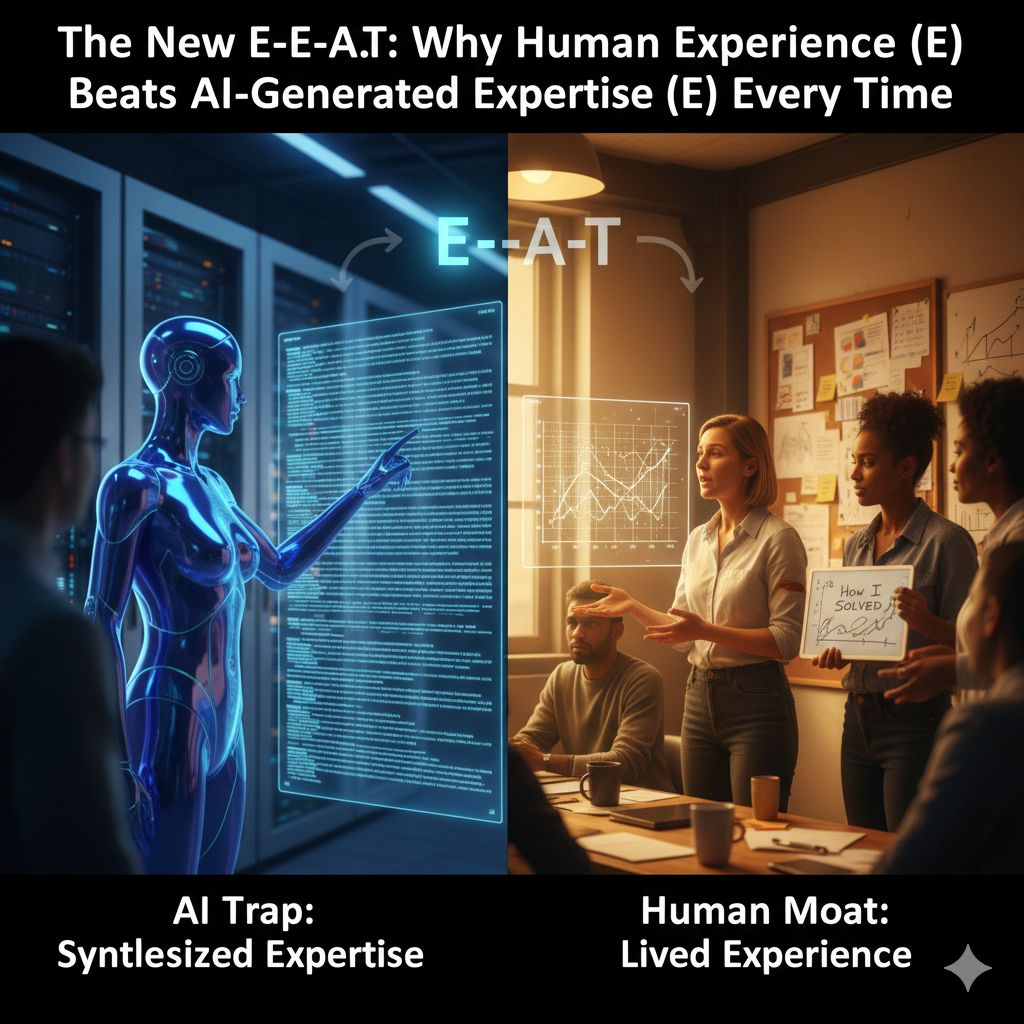
Everyone is using AI to generate content. The result? A flood of perfectly optimized, factually correct, yet utterly soulless content. This has created a severe challenge for Google: distinguishing real value from highly polished synthesis. This is why the new E-E-A-T criteria have become non-negotiable.
This brings the spotlight back to the first ‘E’—Experience—as the ultimate content differentiator.
The AI Trap: Synthesized Expertise vs. Lived Experience
AI models excel at aggregating and re-packaging the Expertise of the internet. They can write a detailed guide on any topic, but they can’t say:
“Based on my ten years launching B2B SaaS platforms, here is the one metric everyone ignores: Cost-Per-Conversation, not just Cost-Per-Lead. I learned this the hard way after burning $50k on a vanity metric.”
That personal, hard-earned knowledge is Lived Experience.
Google, and subsequently its AI Overviews, is becoming incredibly adept at identifying content that is only synthetic. If your post simply repeats what 50 other sites say, the AI will use a handful of them for a citation, but none of them for Authority—because the information is commoditized.
How to Build the “Experience” Moat
Proprietary Data is King: Don’t just quote industry stats; quote your own stats. Content based on your own data can only be cited, not replicated. This includes running small surveys, analyzing anonymized client performance, or publishing internal proprietary methodologies.
The “How I Solved It” Narrative: Frame your content around specific, high-stakes problem/solution narratives. These are your battle stories. Focus on vulnerability and specific detail: “Here’s the mistake we made launching our new website, and the $10,000 lesson we learned that saved our next launch.”
Visible Author Authority: Every piece of content must be visibly attributed to a genuine Subject Matter Expert (SME), like the CEO or the Lead Engineer. The author’s profile must be linked and must reflect a history of relevant work—LinkedIn profiles, conference talks, previous publications—all serve as crucial E-E-A-T signals.
In the age of generative AI, the best SEO strategy is to write content that only a human who has done the work can write. The algorithm is demanding your scars, not your synthesis.
 Website Designing
 Web Development
 App Development
 Ecommerce Development
 Online Branding
 SEO Services
 PPC Services
 Social Media Optimisation
 Link Building Services
 Content Writing